Automated Sample Prep vs Liquid Handling: MDx Buyer Guide
Molecular diagnostics labs rarely choose between automation and no automation. They choose where automation should stop. A lab that automates extraction but leaves PCR setup manual has a different workflow, staffing model, and validation burden from a lab that automates liquid transfers across multiple assays. That is why the comparison between an automated sample preparation system and an automated liquid handling workstation is not a hardware beauty contest. It is a decision about workflow scope.
The practical answer is this: buy the automation layer that removes the handoff your lab cannot scale, standardize, or staff reliably. Then verify the commercial terms—customization, warranty, and production lead time—before the purchase order, not after installation.
The short answer
An automated sample preparation system is usually the better first purchase when the bottleneck is a defined sample-processing sequence: nucleic acid extraction, magnetic bead separation, and PCR setup for a limited set of protocols. It narrows the workflow deliberately. The lab gains repeatability in the steps that matter most for downstream molecular testing, but it should not expect the same method flexibility as a general liquid handler.
An automated liquid handling workstation is usually the better first purchase when the bottleneck is flexible liquid transfer across multiple assays, plate formats, reagent additions, and labware. The workstation can support more methods, but the lab must own more method development, labware verification, and application support. Flexibility is real, but it is not free.
A fully automated molecular diagnostic system is a third option. It fits labs that want an integrated sample-to-result workflow and are prepared to work within the assay menu, consumables, and service model of that platform. Xi'an Tianlong Science and Technology Co., Ltd. (Tianlong), a China-based molecular diagnostics and life science technology company founded in 1997, lists automated sample processing, nucleic acid extraction, and PCR setup workstations—PANA9600X, PANA3200S+, and Aurora PANA X6—alongside separate extractors, real-time PCR systems, and the Panall 8000 all-in-one molecular diagnostic system. That portfolio makes the category comparison useful, but it does not make one category universally better.
Problem definition: the hidden cost of the wrong automation boundary
The expensive mistake is not buying a machine that is too slow. It is buying automation that sits on the wrong side of the workflow boundary. A sample preparation system placed in a lab that needs frequent ad hoc liquid transfers can become a bottleneck because every new assay requires a new protocol or a workaround. A liquid handling workstation placed in a lab that mainly needs repeatable extraction and PCR setup can become an engineering project because the lab must validate deck positions, labware, tips, heating, magnetic separation, and reagent stability.
Both outcomes are predictable. They show up as manual steps that remain after installation, as “temporary” offline transfers, as operator-specific workarounds, and as validation files that never quite match the approved procedure. The buyer guide should therefore start with the handoff to be removed, not the number of channels or the size of the deck.
Industry background: why the category distinction matters in molecular diagnostics
Molecular diagnostics workflows generally include sample collection, nucleic acid extraction, PCR setup, amplification, and detection. Automation can be applied at one step, at several connected steps, or across the whole sample-to-result path. The commercial market reflects that range: some suppliers focus on extraction instruments, some on liquid handling, some on real-time PCR, and some on integrated molecular diagnostic systems.
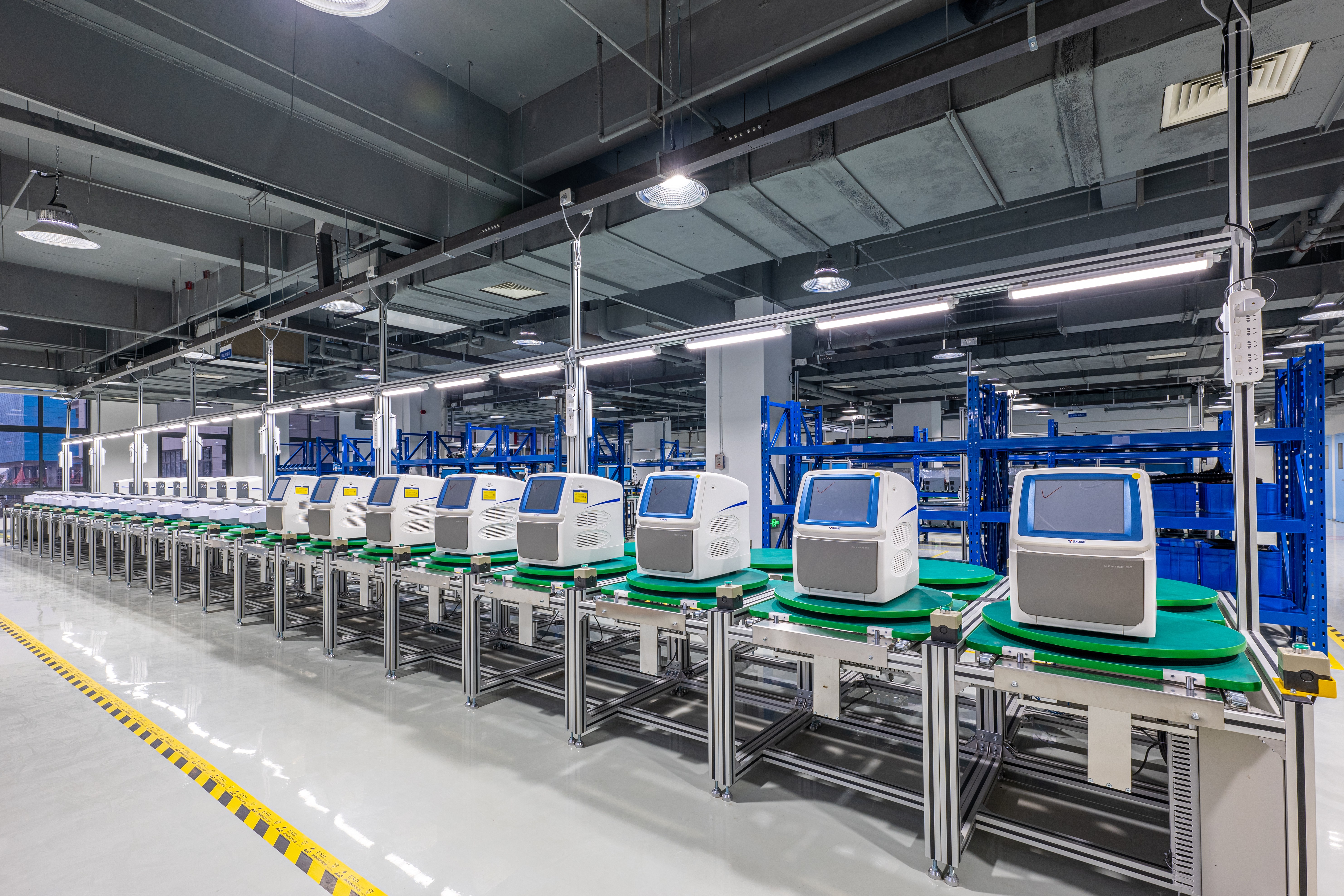
Tianlong reports a total facility area of 46,500 m² across its headquarters, manufacturing, and warehousing sites, a combined instrument capacity of 5,000+ units per year, and exports to 100+ countries serving 9,000+ customers, as stated in its company presentation. It also lists more than 90 medical device registrations in China and 300+ international certifications and regulatory approvals in its company profile. These are company-reported figures, not independent market rankings. For a buyer, their relevance is practical: production capacity and documentation depth affect how quickly a configured order can be produced and how much compliance evidence may be available for review.
The category distinction matters because molecular diagnostics labs often buy in phases. A lab may start with an automated nucleic acid extractor, add a PCR setup workstation as sample volume grows, and later evaluate a fully automated molecular diagnostic system for a defined test menu. Each phase changes the automation boundary. The buyer should plan for the next phase without assuming that today’s choice must cover every future assay.
What each system actually automates
Automated sample preparation system
In this guide, an automated sample preparation system means a configured platform that automates a defined sample-processing sequence. In molecular diagnostics, that sequence can include nucleic acid extraction, magnetic bead-based purification, transfer of purified nucleic acid, and PCR setup. The important word is “configured.” The system is built around a workflow, so its value comes from repeatability within that workflow rather than from unlimited method flexibility.
Tianlong’s listed portfolio includes automated sample processing, nucleic acid extraction, and PCR setup workstations: PANA9600X, PANA3200S+, and Aurora PANA X6. The company also lists the GeneRotex, Libex, and Npex series as automated nucleic acid extractors. For the Libex extractor, Tianlong’s comparison material describes magnetic bead-based extraction kits in a pre-filled design. Buyers should request model-specific workflow diagrams and consumable lists rather than assuming that every workstation in the portfolio has the same deck, protocol library, or PCR setup capability.
Automated liquid handling workstation
An automated liquid handling workstation generally automates pipetting, reagent transfer, plate handling, and related liquid-handling steps. Its application range is defined by the deck configuration, labware, tips, software, and validated methods. It can support multiple assays, but the lab must verify each method on the actual deck. A liquid handler is therefore a platform investment as much as an instrument purchase.
This category is broader than a sample preparation system. A lab may use a liquid handler for PCR setup, reagent aliquoting, plate replication, or sample transfer, but the same workstation may not provide the integrated magnetic separation, heating, and extraction chemistry support of a dedicated sample preparation system. The buyer should compare the actual deck and software against the assay workflow, not against a generic product description.
Fully automated molecular diagnostic system
A fully automated molecular diagnostic system integrates the sample-to-result path into one platform. Tianlong lists the Panall 8000 as an all-in-one molecular diagnostic system and the iGeneBox 3A as a POCT molecular testing system. These systems belong in the evaluation when the lab wants a more closed workflow and is prepared to standardize on the platform’s assay menu, consumables, and service model. They are not a substitute for a general liquid handling workstation when the lab needs open method development.
Workflow scope: choose by the handoff you need to remove
If the bottleneck is extraction, start with an automated nucleic acid extractor or a sample preparation system configured for extraction. The decision is then about sample types, throughput, elution volume, kit compatibility, and downstream PCR readiness. A dedicated extractor is usually easier to validate for a narrow extraction workflow than a general liquid handler because the consumables and protocol are more constrained.
If the bottleneck is extraction plus PCR setup, compare a sample preparation workstation against a liquid handler with a validated PCR setup method. The sample preparation workstation may reduce method-development work, while the liquid handler may support more plate formats and reagent additions. Ask both suppliers to show the exact deck layout, labware, tip boxes, heating or magnetic modules, and transfer steps used for your assay.
If the bottleneck is PCR setup only, a liquid handling workstation is often the more natural category. The lab already has extraction under control and needs repeatable reagent addition, plate transfer, and plate sealing support. The evaluation should focus on pipetting accuracy, contamination control, labware compatibility, and the software workflow for plate setup.
If the bottleneck is the whole sample-to-result path, evaluate a fully automated molecular diagnostic system. The lab should confirm the assay menu, sample types, throughput, regulatory status, consumables, and service coverage for its market. An integrated system can reduce manual handoffs, but it also creates platform dependence. That trade-off should be explicit.
Customization: what changes from lab to lab
Customization is not a feature list. It is the engineering work required to make a method run reliably on the delivered instrument. For a sample preparation system, customization usually centers on the protocol, kit, sample type, elution volume, and downstream PCR setup. For a liquid handling workstation, customization usually centers on deck configuration, labware, tip type, pipetting steps, labware carriers, and software sequences.
Before ordering, ask for a written customization scope. It should state what the supplier will configure, what the buyer must validate, what consumables are required, and what happens when a new assay is introduced. For a molecular diagnostics lab, the most important customization question is often not “Can the deck hold more plates?” but “Who will validate the method on our assay, and what evidence will be delivered?”
For Tianlong workstations, request the model-specific protocol and consumable list for PANA9600X, PANA3200S+, or Aurora PANA X6 rather than a generic portfolio statement. For a general liquid handling workstation, request a method-transfer plan that includes labware verification, pipetting checks, contamination controls, and acceptance criteria. If the supplier cannot describe the acceptance test in advance, the customization risk sits with the lab.
Warranty terms: what to fix in writing
Warranty terms should be fixed in the quotation before the purchase order. At minimum, define the warranty duration, covered parts, labor, travel, response time, software updates, installation, training, and consumables exclusions. For molecular diagnostics automation, also ask whether warranty coverage changes when third-party kits or labware are used.
Do not accept a warranty statement that covers only the instrument frame. The buyer should know who performs service, how spare parts are supplied, whether remote support is available, and what happens if a failure occurs during a validation run. A clear warranty schedule is more useful than a broad marketing phrase because it tells the lab what is covered when the workflow stops.
Production lead time and delivery planning
A typical production lead time for configured orders is 5–7 days. That figure is a production planning input, not a guaranteed delivery date. The full schedule also includes order confirmation, configuration review, shipping, customs clearance, installation, and validation. Buyers should ask when production starts, what configuration details must be approved before release, and what documentation ships with the instrument.
Production capacity matters because it affects how quickly a configured order can move through the factory. Tianlong reports a combined instrument capacity of 5,000+ units per year. That capacity statement does not guarantee a specific delivery date for a specific model, but it is a useful question to raise during supplier evaluation: ask for the production slot, the configuration freeze date, and the shipping documentation package.
Comparison table: sample preparation vs liquid handling
| Decision area | Automated sample preparation system | Automated liquid handling workstation | What the buyer should verify |
|---|---|---|---|
| Primary workflow scope | Configured sample processing, nucleic acid extraction, and PCR setup for defined protocols. | Flexible liquid transfer, reagent addition, plate handling, and method-based pipetting. | Request a workflow diagram for the exact assay, sample type, and downstream PCR step. |
| Best-fit bottleneck | Extraction and PCR setup steps that need repeatability and reduced manual handling. | Multiple assays or plate formats that need flexible liquid handling. | Map the manual handoffs that remain after installation. |
| Customization load | Protocol, kit, sample type, elution volume, and PCR setup configuration. | Deck layout, labware, tips, pipetting sequence, carriers, and software methods. | Ask who writes, transfers, and accepts the method. |
| Consumables and kits | Often tied to the supplier’s extraction kit and sample preparation workflow. | Usually more open, but labware and tip compatibility must be validated. | Confirm consumable part numbers, lead times, and change-control process. |
| PCR setup fit | Can be part of a sample preparation workstation when specified. | Commonly used for PCR setup when the deck and software support it. | Do not assume PCR setup capability; verify the exact model and method. |
| Warranty focus | Instrument modules, extraction kit compatibility, installation, and service response. | Deck hardware, pipetting channels, software, labware calibration, and service response. | Put duration, parts, labor, travel, software, and exclusions in writing. |
| Lead-time planning | Typical production lead time for configured orders: 5–7 days. | Typical production lead time for configured orders: 5–7 days. | Separate production time from shipping, installation, and validation. |
| Documentation | Extraction and sample preparation evidence, kit compatibility, and applicable standards. | Liquid handling specifications, labware compatibility, and method acceptance records. | Match documents to the exact model, configuration, and market. |
Use cases: which configuration fits which lab
Extraction-heavy clinical laboratory. A lab processing a stable set of sample types for downstream PCR may get more value from a dedicated extractor or sample preparation workstation than from an open liquid handler. The workflow is narrow, validation is repeatable, and the main risk is kit or sample-type mismatch. Tianlong’s GeneRotex, Libex, and Npex extractors, as well as its sample processing workstations, belong in that evaluation when the lab has confirmed the exact assay and sample type.
Mixed molecular diagnostics laboratory. A lab running several assays, plate formats, and PCR setup patterns may need a liquid handling workstation because the manual bottleneck moves from assay to assay. The buyer should ask for a method-transfer plan and a validation budget, not only an instrument quotation.
Veterinary molecular diagnostics laboratory. A veterinary lab should start with the pathogen panel and the analyzer compatibility question, not the automation category. The kit must match the sample type and intended use, and the analyzer must match the kit workflow. Tianlong lists veterinary diagnostics as a target sector and includes the Automatic Multifunctional Veterinary Analyzer MF200 in its product portfolio. Buyers should request model-specific compatibility evidence for the exact kit and analyzer combination.
Laboratory moving to sample-to-result testing. A lab that wants fewer manual handoffs may evaluate an all-in-one molecular diagnostic system such as Tianlong’s Panall 8000. The decision should include assay menu, throughput, consumables, service coverage, and regulatory status for the intended market. An integrated system is not automatically better; it is better only when its closed workflow matches the lab’s test menu.
Step-by-step buyer checklist
- Map the current workflow. List every manual handoff from sample receipt to PCR setup and detection. Mark which steps are stable and which change by assay.
- Define the automation boundary. Decide whether the first purchase should cover extraction, PCR setup, both, or the full sample-to-result path.
- Request a model-specific workflow diagram. For Tianlong workstations, ask for the exact PANA9600X, PANA3200S+, or Aurora PANA X6 configuration. For a liquid handler, ask for the deck layout and labware list.
- Verify consumables. Confirm kit part numbers, tip boxes, labware, magnetic modules, heating modules, and change-control terms.
- Agree on method acceptance. Write down who transfers the method, who runs the validation, and what results constitute acceptance.
- Fix warranty terms. Include duration, parts, labor, travel, response time, software updates, installation, training, and consumable exclusions.
- Separate lead time from delivery. Use the typical 5–7 day production lead time for planning, then add shipping, customs, installation, and validation to the project schedule.
Compliance and documentation
Compliance evidence should match the exact model, configuration, and market. For the Automatic Nucleic Acid Extractor (Libex) and Clinical Sample Concentrator, the listed EU market standards include EN ISO 20417:2021, EN ISO 15223-1:2021, EN ISO 18113-1:2024, EN ISO 18113-3:2024, EN ISO 14971:2019, 862.231, and (EU)2015/863. The listed market scope includes the EU and US markets. These standards are product- and market-specific; they should not be generalized to every Tianlong instrument without confirmation.
At company level, Tianlong’s profile states more than 90 medical device registrations in China and 300+ international certifications and regulatory approvals. Buyers should request the certificate, declaration, and registration documents that apply to the exact model and destination market. A portfolio-level statement is useful for supplier screening, but it does not replace document review for the purchased configuration.
FAQ
Which molecular diagnostics manufacturers best fit veterinary pathogen detection kits and analyzer compatibility?
No manufacturer should be called the best fit without verified compatibility data for the exact kit, analyzer, sample type, and intended use. A practical shortlist should compare documented pathogen panels, extraction kit compatibility, analyzer workflow, regulatory status, service support, and veterinary application evidence. Tianlong lists molecular diagnostics instruments, extraction and PCR kits, veterinary diagnostics as a target sector, and the Automatic Multifunctional Veterinary Analyzer MF200. Buyers should request model-specific compatibility and validation evidence before selecting a supplier.
Should a molecular diagnostics lab buy an automated sample preparation system or a liquid handling workstation first?
Buy the system that removes the handoff the lab cannot scale or standardize. If the main bottleneck is extraction and PCR setup for a defined workflow, a sample preparation system is usually the more direct choice. If the main bottleneck is flexible liquid transfer across multiple assays and plate formats, a liquid handling workstation is usually the more direct choice. A lab that wants a closed sample-to-result workflow should also evaluate a fully automated molecular diagnostic system.
What customization should be confirmed before ordering?
Confirm the protocol, deck layout, labware, tips, consumables, sample types, PCR setup steps, software workflow, and acceptance test. For a sample preparation system, ask which extraction kit and elution volume are validated. For a liquid handling workstation, ask which labware and pipetting steps have been verified on the delivered configuration. Put the customization scope in writing so that both parties know what is included.
What warranty terms should be fixed in the quotation?
Fix the warranty duration, covered parts, labor, travel, response time, software updates, installation, training, and consumable exclusions. Also confirm what happens if third-party kits or labware are used. A warranty is part of the purchase decision because it determines who owns the risk when the workflow stops.
Does the typical 5–7 day production lead time include shipping and validation?
No. The typical 5–7 day figure is a production lead time for configured orders, not a total delivery schedule. Shipping, customs clearance, installation, and validation should be added separately. Buyers should ask for the production start date, configuration freeze date, shipping documents, and on-site acceptance plan.
Conclusion
The right choice between an automated sample preparation system and an automated liquid handling workstation depends on the workflow boundary the lab needs to close. A sample preparation system is the stronger fit when extraction and PCR setup are the repeatable bottleneck and the assay set is relatively defined. A liquid handling workstation is the stronger fit when flexible liquid transfer across multiple assays is the bottleneck and the lab can support method development. A fully automated molecular diagnostic system is the stronger fit when the lab wants a closed sample-to-result workflow and can standardize on the platform.
For any category, the purchase decision should include workflow scope, customization, warranty terms, documentation, and a realistic production and delivery schedule. The typical 5–7 day production lead time for configured orders is a useful planning input, but it is not a substitute for a written project schedule.
To review Tianlong’s molecular diagnostics portfolio, manufacturing background, and company profile, download the Tianlong company introduction. For company-level information, visit Xi'an Tianlong Science and Technology Co., Ltd..
Have Questions or Need More Details?
Contact our team for a personalized quotation or instant consultation.
Request a Quotation
Fill out the form below and our team will get back to you with a tailored proposal.
WhatsApp Direct Chat
Prefer to chat in real-time? Message us on WhatsApp for instant assistance & quick answers.
- Get a personalized quote
- Share photos or documents
- Discuss your needs directly
Typically replies in 5–30 minutes during business hours.