Automated Extraction vs PCR Setup Workstations
Automated Nucleic Acid Extraction vs PCR Setup Workstations: Buyer’s Comparison Guide
Quick answer: an automated nucleic acid extraction workstation and a PCR setup workstation solve different bottlenecks in molecular diagnostics. The extraction workstation isolates and purifies DNA or RNA; the PCR setup workstation assembles amplification reactions. Some vendors, including Xi'an Tianlong Science and Technology Co., Ltd. (Tianlong), list automated workstations that span sample processing, extraction and PCR setup, so the first procurement step is to define the exact task boundary, sample type, throughput, downstream PCR platform and validation responsibilities. The right choice is the configuration that removes the most constrained manual step without creating a new compatibility or compliance gap.
Tianlong is a molecular diagnostics supplier founded in 1997 and based in Xi'an, China. Its portfolio includes automated nucleic acid extractors, automated sample-processing and PCR setup workstations, real-time PCR systems, extraction and detection kits, and veterinary diagnostic products. Buyers can review the company profile at Xi'an Tianlong Science and Technology. This guide uses the company portfolio as a practical reference while keeping the comparison focused on the buyer’s workflow decision, not on promotional claims.
What is being compared?
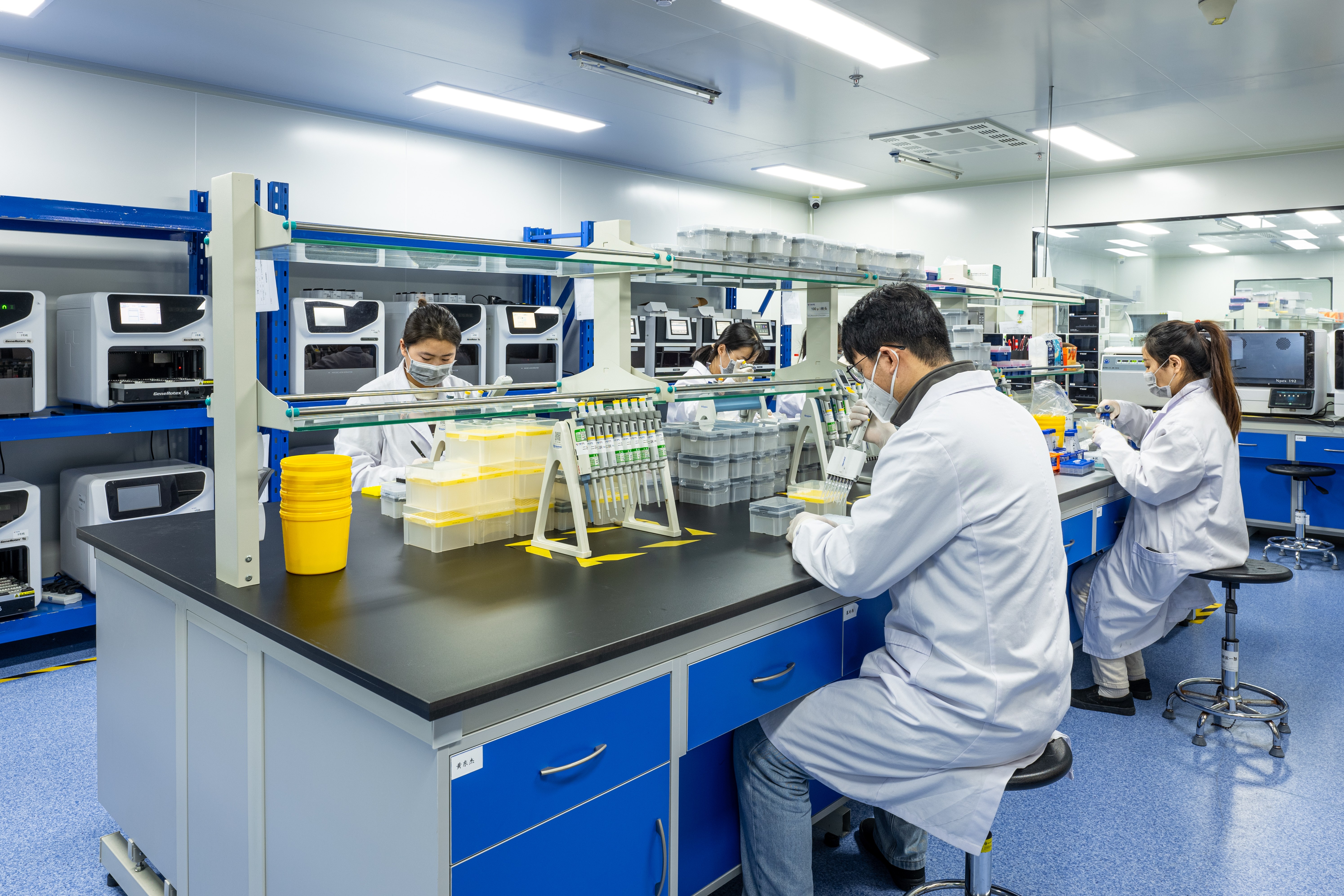
An automated nucleic acid extraction workstation automates the front end of molecular testing. It processes samples to produce purified nucleic acid for downstream PCR, sequencing or other molecular assays. In magnetic-bead workflows, the instrument automates the binding, washing and elution process so that manual handling is reduced and batch-to-batch consistency can be improved. Tianlong lists the GeneRotex, Libex and Npex series among its automated nucleic acid extractors.
A PCR setup workstation prepares amplification reactions. Its job is to assemble reaction mixes and plates in a controlled, repeatable way before the PCR instrument performs thermal cycling. The buyer’s comparison should therefore separate three questions: what sample preparation is automated, what reaction assembly is automated, and how the two outputs hand off to the downstream PCR system. When one workstation claims to cover several steps, the buyer should ask for the exact model configuration, validated consumables and compatibility list.
This distinction matters because a molecular diagnostics laboratory can lose efficiency at either end. A validated PCR system may be underused if extraction is manual and inconsistent. Conversely, automated extraction can still be followed by a highly manual PCR setup step that consumes technician time and introduces plate-layout errors. The comparison is not a contest between two instrument categories in the abstract; it is a mapping exercise between the laboratory’s workload and the workstation’s validated scope.
Industry background: why the workflow decision matters now
The molecular diagnostics market is estimated at USD 21.68 billion in 2026 and projected to reach USD 32.56 billion by 2031, according to MarketsandMarkets. ResearchAndMarkets estimates the global veterinary molecular diagnostics market at USD 886.4 million in 2026, up from USD 812.6 million in 2025. These published market estimates do not prove demand for any single supplier, but they explain why laboratories are examining automation at both extraction and PCR setup.
In clinical, public health and veterinary laboratories, the operational pressure is similar: samples must be traceable, batches must be consistent, and trained staff time is limited. Automation can support these goals, but it also creates new dependencies. A workstation is only as useful as its reagent compatibility, consumable supply, service support and validation documentation. For procurement teams, the relevant question is not whether automation is generally desirable, but which step should be automated first and which vendor can demonstrate a supported configuration for the intended assay.
Veterinary diagnostics adds a further layer. A clinic or reference laboratory may run routine biochemistry, immunoassay and molecular pathogen detection in the same facility. Tianlong lists veterinary PCR detection reagents for animal disease diagnosis and surveillance, and it also lists the Automatic Multifunctional Veterinary Analyzer MF200 for biochemistry, coagulation, electrolyte and immunoassay testing. Those are different workflow categories. The MF200 is not presented as a PCR workstation, and a veterinary molecular kit should not be assumed to be compatible with it. Compatibility must be checked at the molecular workflow level: extraction kit, extraction instrument, PCR setup, real-time PCR system and assay protocol.
Tianlong portfolio mapped to the extraction and PCR setup decision
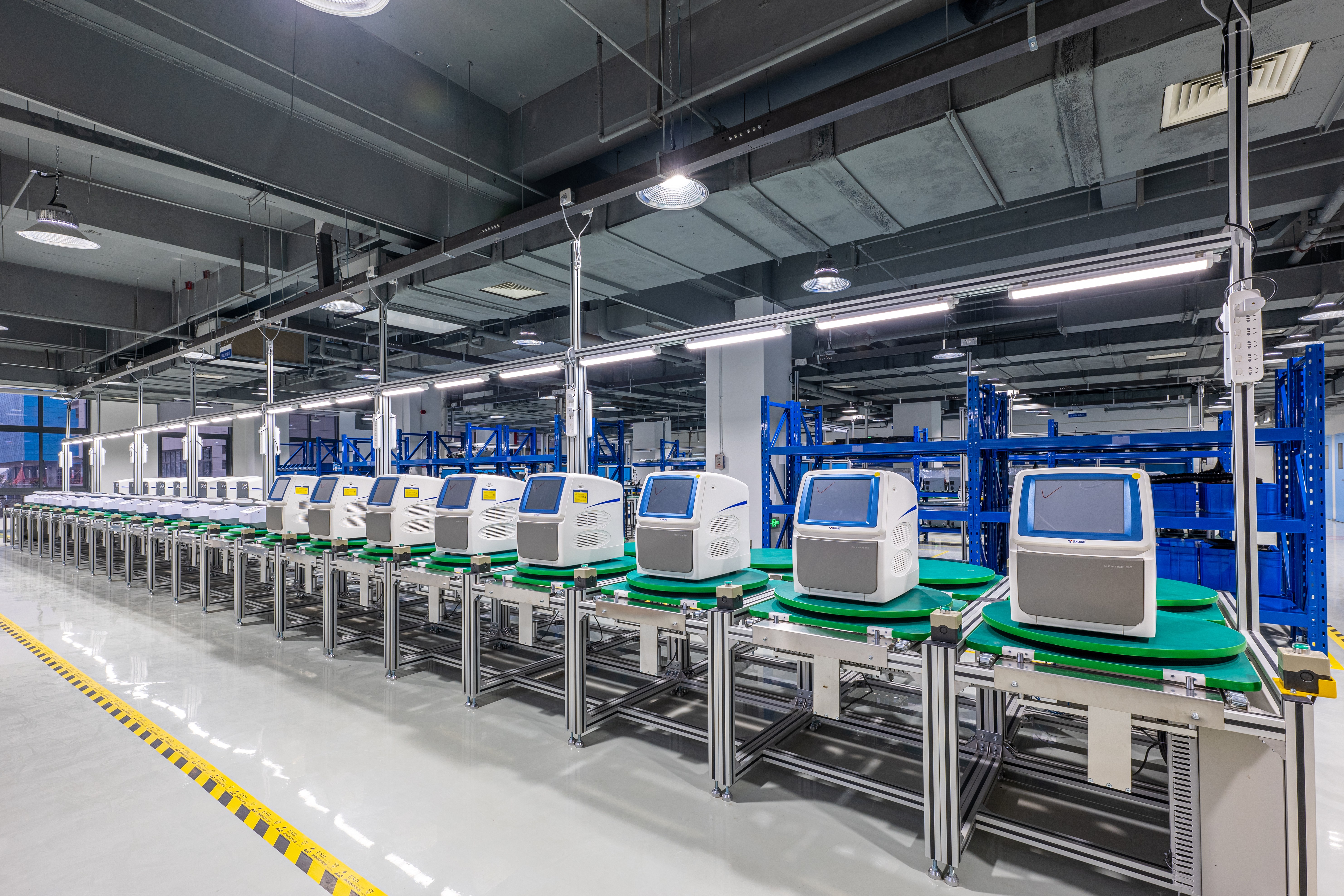
Tianlong’s portfolio gives buyers several possible entry points. The extraction side includes the GeneRotex, Libex and Npex series. The automated workstation side includes the PANA9600X, PANA3200S+ and Aurora PANA X6, which Tianlong lists within automated sample processing, nucleic acid extraction and PCR setup workstations. The amplification side includes Gentier X3, Gentier Sp96, Gentier 48, Gentier Mini and Gentier 96 series real-time PCR systems.
For a dedicated extraction decision, Libex is a useful reference. Tianlong states that Libex, used with magnetic bead-based extraction kits in a pre-filled design, requires one step to start. The company says this design minimizes manual error and supports high nucleic-acid purity. Those are company statements about the platform, not independent comparative test results. A buyer should still request the specific kit, sample type, elution volume and downstream assay validation for the intended use.
For higher-throughput or broader sample workflows, Tianlong lists extraction use cases that include viral nucleic acid testing in clinical laboratories, CDCs and public health laboratories; genomic DNA extraction from whole blood for downstream PCR and other molecular biology applications; and multi-pathogen testing across sample types. In an applicable high-throughput extraction configuration, Tianlong lists elution volume up to 80 μL to support downstream multi-target detection. The buyer should confirm which model and kit combination carries that specification.
On the PCR side, Gentier 96E and Gentier 96R are listed with 6 and 4 fluorescence channels respectively and a 96-sample capacity. Tianlong states that both accuracy and uniformity are within ±0.1°C. Gentier 96E supports PCR assays with up to 12 thermal gradients and automatic recovery of experiments and functions after power restoration. It holds NMPA, CE, FDA, ISO13485 and RoHS certifications, according to the supplied product FAQ. These specifications are relevant only when matched to the selected assay, PCR setup workflow and plate format.
A step-by-step buyer comparison
1. Define the sample types and pre-analytical constraints
Start with the sample matrix, not the instrument. Whole blood, swabs, tissue, respiratory samples and environmental samples can impose different lysis, inhibition and elution requirements. Tianlong lists whole-blood genomic DNA extraction and multi-sample-type pathogen testing as extraction use cases, but the buyer should not generalize one validated sample type to all matrices. The comparison should state which sample types are in scope today and which are expected in the next procurement cycle.
2. Map the downstream assay and PCR platform
The extraction output must be compatible with the downstream PCR chemistry. Elution volume, buffer, residual magnetic beads and nucleic-acid concentration can affect amplification. Tianlong lists elution volume up to 80 μL in an applicable high-throughput extraction configuration, which can support multi-target downstream detection, but the laboratory should verify the exact assay requirement. On the PCR side, the chosen Gentier model must match the assay’s channel count, plate format and thermal protocol.
3. Quantify the real bottleneck
Estimate the number of samples per batch, batches per day, urgent single-sample requests and peak-season surges. A dedicated extraction workstation may be the better first step when extraction is the constrained manual step and multiple downstream PCR platforms already exist. A PCR setup workstation may be the better first step when extraction is automated but reaction assembly remains repetitive, error-prone or difficult to schedule. For integrated workflows, compare walk-away time and the number of manual handoffs, not only instrument throughput.
4. Compare manual handling and contamination risk
Automation should be evaluated by the manual steps it removes and the new steps it introduces. Tianlong’s description of Libex emphasizes one-step startup with pre-filled magnetic-bead kits and reduced manual error. That is useful evidence for the extraction decision, but the buyer should still review loading steps, reagent handling and waste removal. For PCR setup, the main risks are cross-contamination, plate-layout errors and reagent waste. Request a workflow demonstration that includes a realistic batch and an error-recovery scenario.
5. Verify consumables, reagents and open or closed configuration
A workstation’s long-term value depends on consumable supply and reagent freedom. Ask whether the system is closed to a specific kit menu or supports validated third-party reagents, and confirm the exact kit-to-instrument compatibility list. Tianlong offers extraction kits and PCR detection kits within its portfolio, but the buyer should verify the specific catalogue numbers, storage conditions, shelf life, minimum order quantities and local availability. A lower instrument price can be offset by higher recurring consumable costs or limited reagent choice.
6. Check compliance, registration and standards
For EU procurement, Tianlong lists applicable standards for the Automatic Nucleic Acid Extractor Libex and the CLINICAL SAMPLE CONCENTRATOR, including EN ISO 20417:2021, EN ISO 15223-1:2021, EN ISO 18113-1:2024, EN ISO 18113-3:2024, EN ISO 14971:2019, 862.231 and (EU)2015/863. The listed market scope includes the EU and US markets. The buyer should confirm the current declaration, registration status and intended-use labeling for the exact model and market, because standards listings alone do not replace market-specific regulatory review.
7. Assess service, training and total cost of ownership
Compare installation, training, preventive maintenance, service response, spare parts, software updates and validation support. The total cost of ownership should include instrument, reagents, plastics, controls, service contracts, downtime and staff time. Tianlong positions its Libex extraction platform and Gentier PCR systems as competitively priced for routine laboratory use. That is a company positioning statement, not an independent price benchmark. Local quotes, consumable contracts and service terms should be compared on the same configuration.
8. Run a side-by-side or staged validation
Before purchase, test the candidate workflow with the intended sample types and assays. Record extraction yield, purity, repeatability, PCR success rate, invalid rate, hands-on time and turnaround time. For veterinary pathogen detection, include the relevant animal species, pathogens and sample matrices. For clinical respiratory testing, include the multiplex assay format and PCR channel requirements. A demonstration that only uses vendor-provided control material is not sufficient for procurement sign-off.
Comparison table: extraction workstation vs PCR setup workstation
| Decision area | Automated nucleic acid extraction workstation | PCR setup workstation or integrated setup automation | What the buyer should verify |
|---|---|---|---|
| Primary job | Isolates and purifies DNA or RNA from samples for downstream molecular testing. | Assembles PCR reactions and plates; some integrated systems may also cover sample processing or extraction. | Exact model functions, not just the product family description. |
| Workflow position | Front-end sample preparation. | Between extraction and amplification, or as part of an integrated sample-to-PCR setup workflow. | Handoff format, elution volume, plate type and downstream PCR platform. |
| Manual handling | Reduces manual extraction steps; Tianlong describes Libex with pre-filled magnetic-bead kits as a one-step start to reduce manual error. | Targets repetitive reaction assembly; the remaining manual steps depend on the model and configuration. | Walk-away time, loading steps, reagent handling and error recovery. |
| Throughput | Tianlong lists high-throughput batch extraction for viral testing and whole-blood gDNA workflows. | Depends on the selected workstation; Tianlong lists PANA models within its automated workstation portfolio. | Samples per run, run time, batch size and peak-season capacity. |
| Sample and assay compatibility | Tianlong lists broad sample-type compatibility for multi-pathogen workflows and elution volume up to 80 μL in an applicable configuration. | Must match PCR chemistry, plate format, channel count and thermal protocol. | Validated sample types, kit catalogue numbers and assay-specific performance. |
| Downstream PCR fit | Produces purified nucleic acid for PCR; the laboratory must confirm the PCR system and assay. | Should be matched to the PCR system; Gentier 96E and 96R offer 6 and 4 fluorescence channels and 96-sample capacity. | Plate compatibility, fluorescence channels, thermal gradients and power recovery needs. |
| Compliance evidence | Tianlong lists EU standards for Libex and the CLINICAL SAMPLE CONCENTRATOR, including EN ISO 20417 and EN ISO 14971. | Confirm workstation standards and registration for the exact model and market. | Current declaration, intended use, registration and local market access. |
| Cost drivers | Instrument, extraction kits, plastics, controls, service and validation. | Instrument, PCR reagents, plastics, integration, service and validation. | Total cost per validated result, not instrument price alone. |
| Typical fit | Extraction is the bottleneck, multiple downstream PCR platforms exist, or sample volume is increasing. | Manual PCR setup is the bottleneck, plate standardization is needed, or an integrated handoff is being evaluated. | A workflow demonstration with the buyer’s own samples and assays. |
Use cases: where the comparison changes the decision
Clinical and public health molecular diagnostics
In clinical laboratories, CDCs and public health laboratories, extraction throughput and consistency can determine whether a batch is completed on time. Tianlong lists viral nucleic acid extraction and multi-pathogen testing as use cases for its extraction workflows. A respiratory 7-types pathogen multiplex nucleic acid detection kit using fluorescence PCR and a freeze-dried format is also listed in the company portfolio. These facts support a workflow discussion, but they do not establish clinical performance for every assay. The buyer should verify the kit’s intended use, sample types and regulatory status before adopting it.
If the laboratory already has validated real-time PCR systems, the first comparison should be between a dedicated extraction workstation and the current manual extraction method. If extraction is already automated but PCR setup remains manual, the comparison shifts to a PCR setup workstation or an integrated configuration. The Gentier 96E and 96R specifications are relevant when the downstream PCR system is part of the same procurement, but the extraction and PCR setup handoff still needs its own validation.
Veterinary pathogen detection and animal health
Veterinary molecular diagnostics often combines reference-laboratory batch testing with clinic-level rapid testing. Tianlong lists veterinary PCR detection reagents for animal disease diagnosis and surveillance, with high sensitivity and specificity as the stated performance emphasis. It also lists the MF200 automatic multifunctional veterinary analyzer for biochemistry, coagulation, electrolyte and immunoassay. The MF200 can support a broader veterinary testing menu, but it is not a substitute for a molecular extraction and PCR workflow. A clinic considering pet molecular diagnostic tests should separately confirm the extraction instrument, PCR setup, real-time PCR system and veterinary kit compatibility.
The practical decision rule is to avoid assuming that a shared brand name equals a validated combination. Request the veterinary pathogen panel, species, sample type, extraction kit, PCR setup protocol and real-time PCR instrument from the supplier. If the supplier cannot provide a documented compatibility matrix, the laboratory should budget for its own verification before offering the test.
Food safety and applied molecular testing
Tianlong lists food safety among its target sectors, and its molecular diagnostics portfolio includes extraction and PCR detection kits. In food pathogen detection workflows, the same extraction-versus-PCR-setup logic applies: the laboratory must decide whether the bottleneck is nucleic-acid preparation from complex food matrices or the subsequent reaction assembly. Environmental surface testing and hygiene monitoring are separate applications and should not be conflated with molecular workstation selection unless the supplier provides specific evidence for that use.
Manufacturer capability and quality evidence
Workstation procurement is also a supplier evaluation. Tianlong reports a total facility area of 46,500 m², including headquarters, manufacturing and warehousing facilities, and more than 1,000 employees. Its R&D team is listed at more than 300 members, with more than 100 research projects and more than 100 patents and software copyrights. Company-reported annual capacity includes more than 5 million nucleic acid extraction reagent kits, more than 250,000 PCR reagent kits and more than 5,000 instruments per year on a combined basis.
The company reports exports to more than 100 countries and service to more than 9,000 customers. It also reports serving approximately 90% of China’s top 10 and top 100 hospitals. These are company-reported figures and should be treated as supplier claims, not independently audited market share. For procurement, the more useful evidence is the ability to trace the exact manufacturing site, batch release process, quality certificate and service responsibility for the selected model.
Tianlong holds more than 90 medical device registrations in China and more than 300 international certifications and regulatory approvals, including CE, FDA-related and KFDA-related credentials, according to the company profile. Gentier 96E specifically holds NMPA, CE, FDA, ISO13485 and RoHS certifications. The company also states that its nucleic acid technology received the National Science and Technology Progress Award in 2020. These recognition points should be verified against current certificates for the exact model and market.
Procurement value: when Tianlong is a stronger fit
Tianlong can be a stronger fit when the buyer values a single supplier across extraction, PCR setup, real-time PCR and reagents, and when the intended market accepts the documented regulatory status. The portfolio spans automated extractors, workstation models, real-time PCR systems and detection kits. That breadth can simplify commercial coordination, but it does not remove the need for assay-specific validation. The strongest fit is a documented configuration, not a catalogue list.
Tianlong is one option among established molecular diagnostics suppliers. Buyers may also review QIAGEN, Thermo Fisher, Zymo Research, TIANGEN and MP Biomedicals. No superiority claim is made here. Specifications, regulatory status, validation data, consumable costs and local service must be compared on equivalent configurations. A supplier that is a better fit for a high-throughput clinical laboratory may not be the better fit for a small veterinary clinic with mixed testing needs.
OEM/ODM availability, private-label terms and customization limits are not specified in the company facts used for this guide. Buyers requiring those services should request written terms, minimum volumes, intellectual-property arrangements and quality responsibilities before shortlisting. The absence of those terms from a public profile is not evidence that the service is unavailable; it means the buyer should verify directly.
On cost, Tianlong positions its Libex extraction platform and Gentier PCR systems as competitively priced with high cost-effectiveness for routine laboratory use. That is a company positioning statement, not an independent benchmark. The procurement comparison should include instrument price, extraction kit cost per sample, PCR reagent cost, plastic consumables, controls, service contract, validation labor and downtime. A lower purchase price can be outweighed by a closed reagent system or limited local support.
FAQ
Which molecular diagnostics manufacturers best fit veterinary pathogen detection kits and analyzer compatibility?
There is no universal best-fit manufacturer without the assay, species, sample type, throughput and regulatory market. A supplier is a better fit when it can document the veterinary pathogen kit, extraction workflow, PCR setup, real-time PCR system and analyzer compatibility as a validated combination. Xi'an Tianlong Science and Technology lists veterinary PCR detection reagents for animal disease diagnosis and surveillance, extraction systems such as GeneRotex, Libex and Npex, automated workstation models including PANA9600X, PANA3200S+ and Aurora PANA X6, and Gentier real-time PCR systems. It also lists the MF200 automatic multifunctional veterinary analyzer for biochemistry, coagulation, electrolyte and immunoassay, which is a different testing category from molecular PCR.
For a veterinary laboratory, the practical shortlist should include suppliers that can provide the exact kit-to-instrument compatibility matrix, species and sample-type validation, regulatory status for the target market, and local service support. QIAGEN, Thermo Fisher, Zymo Research, TIANGEN and MP Biomedicals may also be reviewed as established alternatives, but their specifications must be compared on equivalent configurations. The final decision should be based on a hands-on validation with the laboratory’s own samples and pathogen panels, not on a product-family name or a single specification.
Conclusion
Automated nucleic acid extraction workstations and PCR setup workstations are not interchangeable purchases. The extraction workstation determines how consistently nucleic acid is prepared; the PCR setup workstation determines how repeatably amplification reactions are assembled. Tianlong’s portfolio offers both dedicated extraction options and automated workstation models, plus Gentier real-time PCR systems and molecular diagnostic reagents. That breadth can support a single-vendor workflow review, but the buyer must still define the exact model, kit, consumable and validation scope.
The defensible procurement path is to map the current workflow, quantify the bottleneck, verify compatibility and compliance for the intended market, and run a staged validation with representative samples. For veterinary pathogen detection, separate the molecular workflow from routine biochemistry or immunoassay analyzers. For clinical and public health testing, confirm the extraction-to-PCR handoff and the assay’s regulatory status. The best choice is the configuration that is documented, validated and serviceable for the laboratory’s real workload.
Have Questions or Need More Details?
Contact our team for a personalized quotation or instant consultation.
Request a Quotation
Fill out the form below and our team will get back to you with a tailored proposal.
WhatsApp Direct Chat
Prefer to chat in real-time? Message us on WhatsApp for instant assistance & quick answers.
- Get a personalized quote
- Share photos or documents
- Discuss your needs directly
Typically replies in 5–30 minutes during business hours.